Disclosure: This architecture guide reflects real production systems operated by MoltyFlywheel and TVT Agency. We are officially accredited Hostinger Trusted Partners. When you deploy infrastructure using our partner codes, we earn an affiliate commission at no extra cost to you.
If you are still using artificial intelligence merely as an ad-hoc prompt box inside a browser tab, you are operating at a severe disadvantage against modern digital publishers.
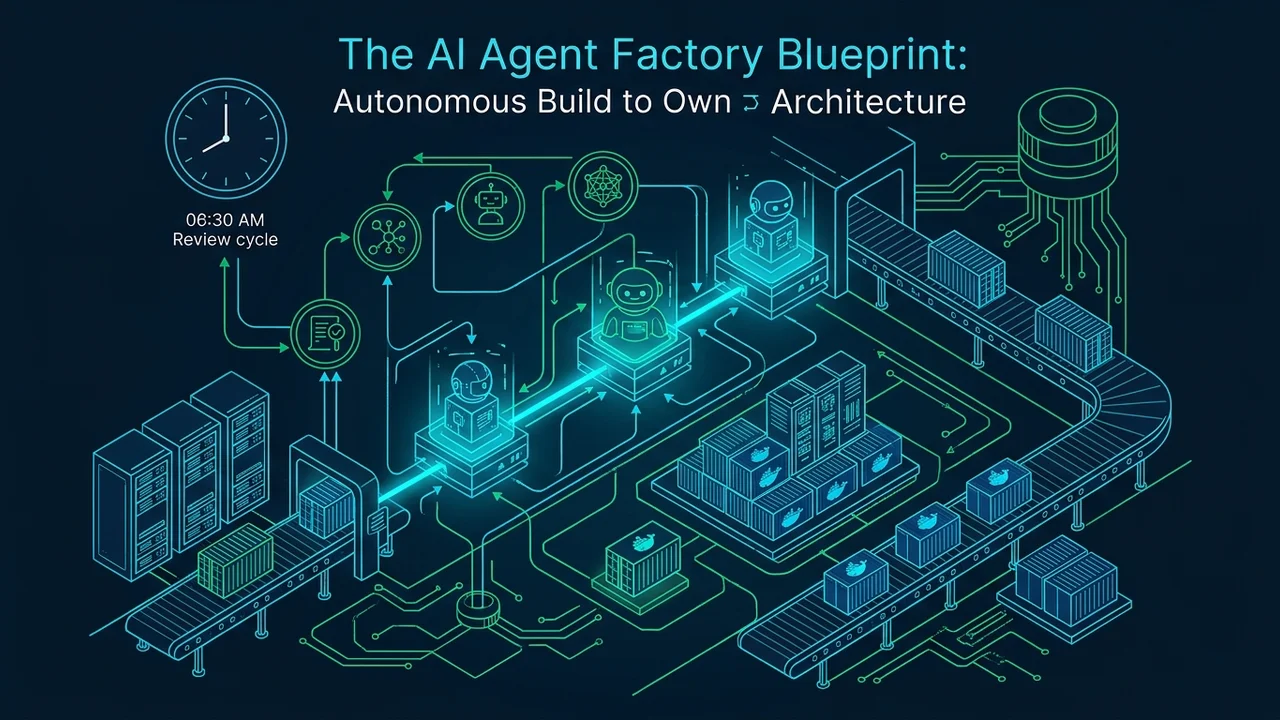
In 2026, the competitive frontier has decisively transitioned from manual content generation to Autonomous AI Agent Factories. Instead of spending four hours drafting a single review, top-tier solo operators run event-driven multi-agent pipelines that continuously monitor market signals, structure programmatic entity maps, synthesize code-validated drafts overnight, and present clean operational summaries for morning human sign-off.
This is the “Build to Own” methodology: constructing durable, private software assets that compound over time rather than renting disposable cloud SaaS subscriptions.
Quick Answer: An AI Agent Factory is an autonomous, headless pipeline where specialized sub-agents execute research, SEO/AIO structuring, and content drafting during scheduled overnight windows. The operator acts as Editor-in-Chief during a focused 15-minute Morning Review at 06:30 AM. Built on low-cost KVM VPS hardware ($7–$10/month) using PM2, Docker, and Telegram webhooks, this architecture enables a single founder to manage the publication volume and technical depth of a full 10-person agency.
The three-stage Agent Factory architecture
The traditional approach to AI content fails because it expects a single model prompt to handle research, angle development, brand voice, and fact-checking all at once.
An Agent Factory decouples these responsibilities into an asynchronous pipeline:
┌───────────────────────────────────────────────────────────────────────────────────┐
│                          STAGE 1: NIGHTLY EXECUTION (01:00 AM - 05:00 AM)         │
├───────────────────────────────┬───────────────────────────────────────────────────┤
│ [Agent 1: Scout / Radar]      │ Scrapes ProductHunt, GitHub releases, & ad trends │
│ [Agent 2: Entity / AIO Engine]│ Maps semantic nodes, search intent & schema gaps  │
│ [Agent 3: Synthesis & Code]   │ Drafts Markdown, runs code tests & validates schema│
└───────────────────────────────┴───────────────────────────────────────────────────┘
                                        │
                                        ▼ (Stored to Git / SQLite)
┌───────────────────────────────────────────────────────────────────────────────────┐
│                          STAGE 2: MORNING REVIEW (06:30 AM - 06:45 AM)           │
├───────────────────────────────┬───────────────────────────────────────────────────┤
│ [Morning View Engine]         │ Synthesizes 8 hours of logs into 1 Telegram card  │
│ [Operator Voice / Tap Input]  │ 1-Click Approve, Reject, or Quick Voice Directive │
└───────────────────────────────┴───────────────────────────────────────────────────┘
                                        │
                                        ▼ (Feedback Loop)
┌───────────────────────────────────────────────────────────────────────────────────┐
│                          STAGE 3: THE 3-STRIKE EVOLUTION RULE                     │
├───────────────────────────────┬───────────────────────────────────────────────────┤
│ • Mentioned 1-2 times         │ Immediate manual tweak in Git                     │
│ • Mentioned 3+ times          │ Auto-packaged into permanent System Skill (/skills)│
└───────────────────────────────┴───────────────────────────────────────────────────┘
Stage 1: Nightly automated execution (01:00 AM – 05:00 AM)
When web traffic dips and server compute is cheapest, scheduled cron daemons activate. Specialized agent roles run in serial isolation:
- The Scout Agent: Ingests external market signals, tracking pricing changes, developer releases, and trending SaaS tools.
- The Optimization Agent: Compares incoming topics against your existing content graph to prevent keyword cannibalization and optimize for dual discovery (Google SEO + Perplexity/ChatGPT AIO).
- The Synthesis Agent: Formats production-ready Markdown with structured data, FAQ sections, and technical comparisons.
Stage 2: The 15-minute Morning Review (06:30 AM)
Human oversight is non-negotiable for enterprise-grade quality. However, human effort should be concentrated purely on judgment, not mechanical typing.
At 06:30 AM, an automated watchdog aggregates nightly outputs into a single Telegram digest. With two taps on a smartphone, the operator approves drafts for deployment or returns them with a voice note instruction.
Stage 3: The 3-Strike Rule (Prompt-to-Skill Packaging)
The single biggest operational waste in AI management is repeatedly pasting the same correction into chat prompts. The Agent Factory enforces the 3-Strike Rule:
- If you correct an agent’s tone or logic once or twice: Apply an instant manual edit.
- If you find yourself correcting the same behavior three times: Abstract the instructions into a permanent, reusable System Skill committed directly to your repository (e.g.,
SKILL.md). The factory never makes the same mistake four times.
The Open Directory strategy: Solving the cold-start problem
Every digital business faces the classic two-sided marketplace dilemma: you cannot negotiate lucrative affiliate deals without high traffic, but you cannot generate consistent organic traffic without reviewing hundreds of tools.
The Agent Factory solves this through the Open Directory Strategy:
                         [ Unpaid Open Directory ]
                     (/tools/ & /programs/ Directories)
                                    │
               ┌────────────────────┴────────────────────┐
      [ Inbound SaaS Brands ]                   [ Organic Buyers ]
      Apply to be listed / claimed              Find curated tools & frameworks
               │                                         │
               ▼                                         ▼
      [ Leverage Shift ]                        [ Monetized Bridge ]
   Brands grant private coupon codes       Traffic converts on trusted
and high commission tiers (20-60%) partner offers (/go/partner/)- Deploy a Programmatic Directory: Maintain open, indexable directory pages covering tools and affiliate programs (such as MoltyFlywheel’s
/tools/and/programs/collections). - Shift Negotiation Leverage: Instead of pitching SaaS affiliate managers via cold email, software vendors actively discover your directory and submit requests for verified badges, product updates, and top-three placement.
- Monetize the Top of the Funnel: You convert free directory listings into high-leverage partnerships, securing exclusive promotional codes (such as our official Hostinger partner code
TVTAGENCY).
Infrastructure blueprint: Self-hosted VPS vs. Cloud SaaS
Enterprise marketing suites will attempt to sell you multi-seat cloud subscriptions costing $500 to $1,500 per month. A lean operator can run an identical capacity factory for under $10 per month.
Here is the exact infrastructure stack required:
| Infrastructure Layer | Recommended Tool | Production Role | Cost |
|---|---|---|---|
| Compute Server | Hostinger KVM 2 VPS | 2 vCPU, 8 GB RAM, 100 GB NVMe, Ubuntu 22.04 LTS | ~$7.99 / mo |
| Terminal Manager | tmux | Keeps long-running Python scraping sessions alive across disconnects | Free (Open Source) |
| Process Daemon | PM2 | Auto-restarts scripts on crash, manages memory limits, and runs on boot | Free (Open Source) |
| Workflow Engine | Docker Compose (n8n) | Executes webhook pipelines and database integrations | Free (Self-Hosted) |
| Alert Gateway | Telegram Bot API | Pushes morning review summaries directly to mobile devices | Free |
Production deployment cheat sheet
To spin up your own persistent agent runtime on a Hostinger KVM VPS:
# 1. Connect to your VPS instance
ssh root@YOUR_SERVER_IP

# 2. Update Linux packages and install runtime tools
apt update && apt upgrade -y
apt install -y tmux curl git nodejs npm

# 3. Install PM2 process supervisor globally
npm install -g pm2

# 4. Create your ecosystem configuration
cat << 'EOF' > ecosystem.config.js
module.exports = {
  apps: [{
    name: "hermes-agent-factory",
    script: "./factory_runner.py",
    interpreter: "python3",
    autorestart: true,
    max_memory_restart: "2G",
    env: {
      PYTHONUNBUFFERED: "1",
      NODE_ENV: "production"
    }
  }]
};
EOF

# 5. Launch and register with systemd boot
pm2 start ecosystem.config.js
pm2 save
pm2 startup
Frequently Asked Questions
What hardware is required to run an autonomous AI Agent Factory?
You do not need dedicated GPU hardware because LLM inference is handled via high-speed API endpoints (OpenRouter, DeepSeek, Claude, Gemini). A server with 2 vCPUs and 8 GB of RAM—such as the Hostinger KVM 2 VPS—is more than sufficient to orchestrate headless scrapers, Docker containers, and database pipelines.
How does an Agent Factory prevent AI hallucinations in published articles?
By enforcing deterministic verification stages. The Synthesis Agent is strictly isolated from raw web scraping; it can only reference structured facts, validated tables, and code snippets compiled during the Research stage. Furthermore, the human-in-the-loop Morning Review provides a mandatory editorial gate before publishing.
What is the difference between SEO and AIO in this architecture?
Traditional SEO targets keyword density and backlink structures for Googlebot. AIO (AI Optimization / Generative Engine Optimization) structures content using direct Answer-first paragraphs, schema markup, and explicit entity relationships so that conversational AI engines like Perplexity, ChatGPT Search, and Claude cite your content as their primary factual source.
Can I build an Agent Factory if I am not a software engineer?
Yes. Using pre-built tools like n8n on Docker, PM2 for process management, and Astro for static site generation, the entire system can be assembled using copy-paste terminal blueprints without writing complex application code from scratch.
Ready to Own Your AI Infrastructure?
Stop paying variable SaaS fees for every single task. Deploy your self-sustaining Agent Factory on enterprise-grade hardware backed by Hostinger’s 30-day money-back guarantee.
What You Unlock with Hostinger KVM:
- Dedicated AMD EPYC CPU cores and 100% NVMe SSD storage.
- Datacenter availability in Singapore, the US, and Europe for minimal latency.
- Full compatibility with Docker, n8n, Python daemons, and PM2.
👉 Claim Your Official Hostinger Partner Discount with Code TVTAGENCY