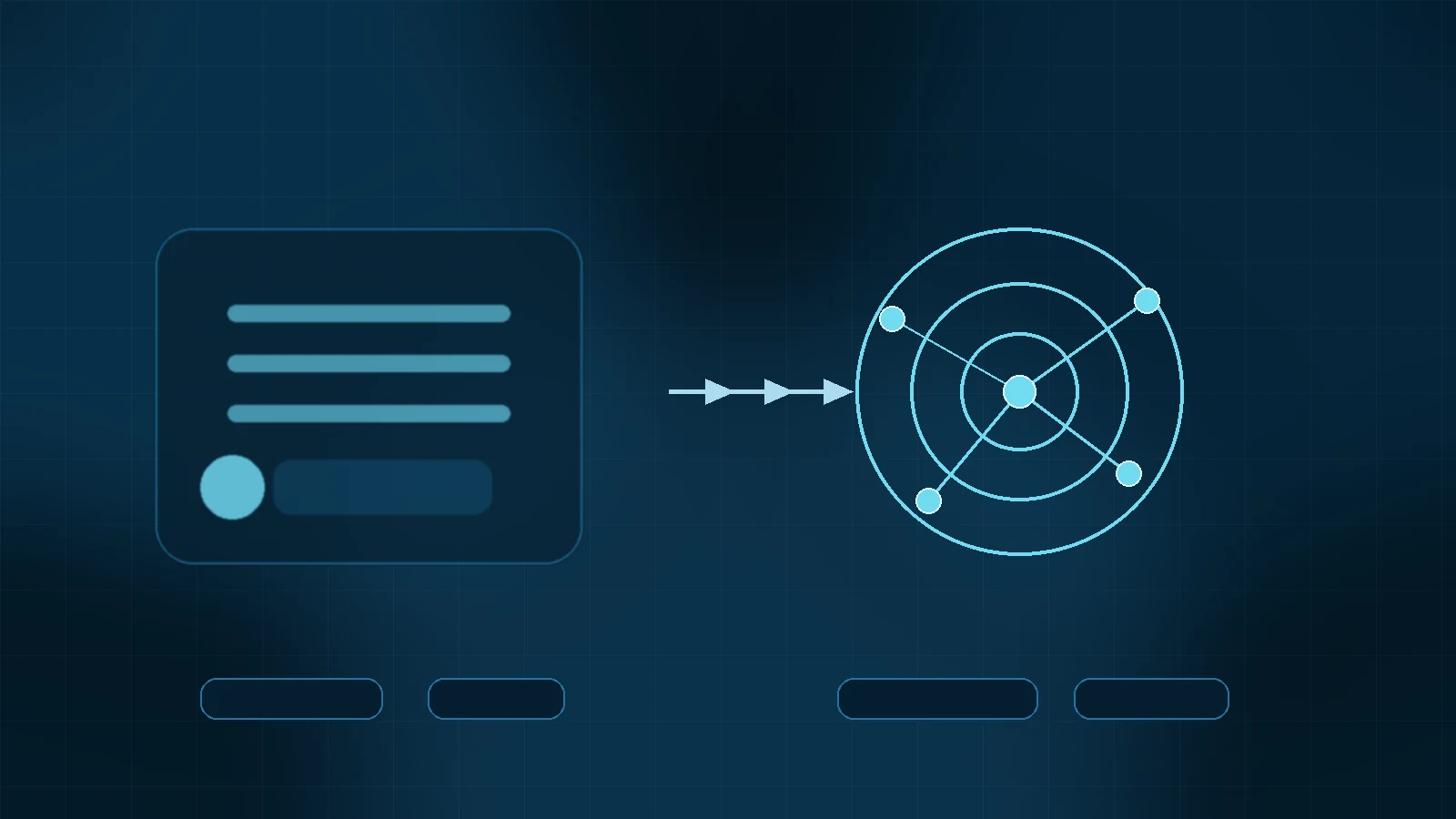
People use the terms AI agent and AI assistant as if they mean the same thing.
They do not.
The confusion is understandable. Both can answer questions, help with writing, summarize information, and support daily work. But once you move beyond surface-level chat interactions, the difference becomes important very quickly.
Quick Answer: An AI assistant mainly helps you complete a task when you direct each step. An AI agent is designed to pursue a goal across multiple steps with more autonomy, often using tools, memory, and self-correction along the way. The right choice depends on whether you need support inside the task or independent progress toward the outcome.
Why the Distinction Matters
If you are only asking an AI to help draft an email or summarize notes, the difference barely matters. But if you are trying to redesign workflows, automate repeated decisions, or build systems that run with less supervision, the distinction matters a lot.
This is where many teams make the wrong decision.
They buy into “agentic AI” messaging when what they really need is a strong assistant. Or they keep using an assistant for a workflow that now requires more autonomy, tool use, and feedback loops than a chat-style model can handle well.
That is why it helps to define the two clearly before talking about use cases.
If you want the broader foundation first, start with what Agentic AI actually is in 2026. This article narrows the comparison to one practical question: when do you need an assistant, and when do you need an agent?
What an AI Assistant Does
An AI assistant is mainly designed to help a human move faster inside a task.
The pattern usually looks like this:
- you provide the prompt
- the model responds
- you review the result
- you decide the next step
The assistant may be very powerful, but the control loop still sits with you.
Typical assistant behaviors include:
- answering questions
- drafting copy
- summarizing long text
- rewriting content
- brainstorming options
- helping you think through a problem
The assistant is not usually deciding what to do next on its own. It is reacting to your requests and helping you make the next move.
That is why assistants work so well for:
- writing support
- editing
- research help
- learning tasks
- ideation
They are excellent when the human still wants to own the sequence of work.
What an AI Agent Does
An AI agent is built for something broader: moving toward a goal across multiple steps with more independence.
Instead of waiting for a new prompt after each step, an agent can:
- break a goal into tasks
- choose what tool to use next
- evaluate intermediate results
- correct its own path when something fails
- continue until it reaches a useful stopping point
That does not mean it is fully unsupervised in every situation. But it does mean the system is designed for multi-step execution rather than single-step assistance.
A basic example:
- an assistant helps you write a competitor analysis
- an agent gathers the competitor data, organizes it, compares it, drafts the analysis, and flags missing inputs before returning a finished package
That is a meaningful jump in operating behavior.
The Simplest Way to Think About It
Here is the easiest mental model:
| Question | AI Assistant | AI Agent |
|---|---|---|
| Who decides the next step? | Usually the human | Often the system |
| Main interaction style | Prompt and response | Goal and execution loop |
| Best for | Support inside a task | Progress across multiple tasks |
| Tool use | Sometimes | Commonly central |
| Autonomy | Low to medium | Medium to high |
| Risk if used wrong | Slower workflow | Workflow complexity or error propagation |
This table is simple on purpose. Real products often blur the boundary. Some assistants now include more agent-like features. Some agents still feel assistant-like because the human keeps a tight review loop.
But the distinction still holds:
- assistants help you do
- agents help the system advance
When an Assistant Is the Better Choice
Not every workflow needs an agent.
In fact, many people are better served by a strong assistant because their work is still highly judgment-based, context-sensitive, or exploratory.
An assistant is often the better fit if:
- you are still figuring out what the task should look like
- each step needs human taste or judgment
- the cost of a wrong intermediate move is high
- you mainly need better writing, summarization, or analysis support
- the workflow is not stable enough to automate yet
This is why content teams often start with assistants first. A model like Claude can make drafting, editing, and synthesis dramatically faster without forcing the whole team into a more complex orchestration layer.
If your main use case is still editorial or document-heavy, our guide to using Claude AI more effectively is the more relevant next step than jumping straight to “agents everywhere.”
When an Agent Is the Better Choice
An agent becomes more useful when the task already has structure, repeated steps, and a clear end state.
Good examples include:
- weekly research monitoring
- support triage
- content pipeline orchestration
- report generation
- lead qualification workflows
- multi-source information gathering
In these cases, the value comes from reducing the number of times a human has to intervene between steps.
That is the key test:
Would the workflow improve if the system could keep moving between steps without waiting for me each time?
If the answer is yes, you may be looking at an agent problem rather than an assistant problem.
The Most Common Mistake: Using an Assistant Like an Agent
This happens constantly.
Teams build a workflow around a chat-style assistant and assume it can handle the orchestration layer too. The human ends up stitching everything together manually:
- asking for research
- copying it elsewhere
- requesting a summary
- checking references
- reformatting the output
- deciding what to do next
At first this still feels efficient because the model is fast. But over time, the human becomes the bottleneck again.
That is the point where an assistant workflow starts showing its ceiling.
If you want examples of where that ceiling starts to matter in real business settings, see 5 practical Agentic AI applications for small businesses.
The Opposite Mistake: Forcing an Agent Too Early
The reverse problem is also common.
Some teams try to make everything “agentic” before the workflow is even clear.
That usually creates:
- noisy outputs
- extra debugging
- unclear responsibility
- automation for a process that was not mature enough yet
An agent is not automatically better. It adds more moving parts:
- tool connections
- memory handling
- error states
- review logic
- feedback loops
If the workflow is still unstable, a strong assistant plus a disciplined human operator may be the smarter choice.
So Which One Fits You?
Choose an AI assistant if you:
- want help writing, editing, summarizing, or planning
- still want to control each step
- work in tasks where taste, nuance, or judgment matter heavily
- are improving a workflow rather than automating it end to end
Choose an AI agent if you:
- already know the goal and the repeated steps around it
- want the system to move between steps with less supervision
- have a workflow that benefits from tool use and memory
- can review outputs at the right checkpoints
And choose a hybrid if you:
- want assistants for creative or judgment-heavy work
- want agents for structured execution around that work
That hybrid model is where many strong teams end up.
A Practical Rule of Thumb
Use this simple test:
- If you are asking, “Can this help me with the next step?” you probably need an assistant.
- If you are asking, “Can this handle the next several steps?” you are moving toward an agent.
That is not a perfect technical definition. But it is a very useful operating definition.
It helps avoid two bad decisions:
- expecting too much from an assistant
- overbuilding an agent where a simpler assistant would do the job better
Frequently Asked Questions
Is ChatGPT an AI assistant or an AI agent?
In its basic form, it behaves more like an AI assistant. Some features can become more agent-like when they involve tools, memory, or autonomous task handling, but the default interaction pattern is still assistant-oriented.
Can an AI assistant become an AI agent?
Yes. The distinction often depends on how the system is configured. A base model can support agentic behavior when it is connected to tools, memory, planning loops, and execution logic.
Which one is better for content teams?
Most content teams benefit more from assistants first. Writing, editing, ideation, and synthesis are often still judgment-heavy tasks. Agents become more useful around orchestration, research gathering, distribution steps, and repeatable reporting.
Do I need an AI agent for automation?
Not always. If the workflow is fully predictable, traditional automation may be enough. An agent becomes more useful when the task includes uncertain inputs, multi-step reasoning, or adaptive decision-making.
What is the biggest difference in one sentence?
An AI assistant helps you work through a task, while an AI agent helps a system move toward an outcome with more autonomy.
💡 Want the practical next layer after this comparison?
If you are trying to understand where assistants end and more autonomous workflows begin, the best next read is the full Agentic AI foundation piece.