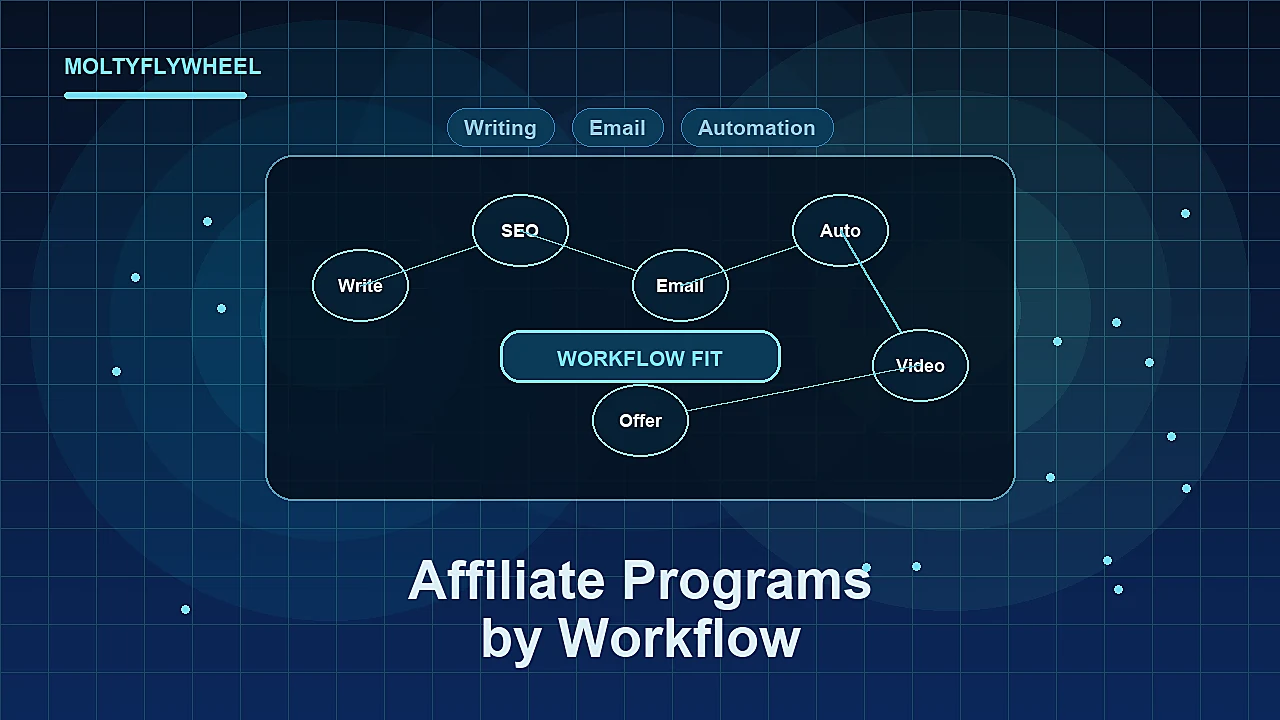
If you choose affiliate programs only by commission size, you will usually build the wrong content around them.
The better question is which program fits the workflow your audience is already trying to improve.
Quick Answer: The best affiliate program is not always the one with the highest commission. It is the one that matches a specific workflow: writing, SEO, email, automation, video, productivity, or audience monetization. Workflow fit creates stronger content, better recommendations, and more durable conversion than chasing payout size alone.
If you are still choosing between broad offer routes, the best offer page type framework helps you decide whether you need a beginner fit page, comparison page, or niche path first. This article focuses on program selection.
Why Commission Size Is a Weak Starting Point
High commissions look attractive because they are easy to compare.
That does not make them the right starting point.
A 50% recurring program can still underperform if your audience has no urgent reason to adopt the product. A lower-commission program can perform better if it solves a clear workflow problem your readers already understand.
Affiliate conversion usually comes from fit:
- reader intent
- problem urgency
- product relevance
- content angle
- trust in the recommendation
- timing in the workflow
Commission size matters after fit is established. It should not be the first filter.
The stronger approach is to group programs by workflow type.
Workflow Type 1: Writing and Content Production
Writing tools fit audiences trying to produce more content, improve drafts, or reduce blank-page friction.
This category includes tools such as Claude, Koala Writer, Writesonic, Jasper, Copy.ai, Frase, and other writing or content optimization platforms.
The best content angles are:
- review posts
- comparison posts
- prompt workflows
- SEO content workflows
- content refresh systems
- program-specific use cases
Writing tools work best when the reader already feels a production bottleneck. They are less compelling when the reader does not publish consistently.
Good fit:
- bloggers
- affiliate site operators
- content agencies
- SEO teams
- solo creators with publishing cadence
Poor fit:
- beginners with no niche yet
- audiences looking for one-off writing help
- teams without editorial review
Workflow Type 2: SEO and Research
SEO and research tools fit audiences trying to decide what to publish, how to structure content, and how to compete in search.
This category includes tools such as Semrush, Surfer SEO, Frase, and adjacent research platforms.
The strongest content angles are:
- keyword research workflows
- content optimization guides
- comparison and alternative posts
- niche research processes
- content decay audits
- AI search readiness
These programs usually require a more educated audience. A total beginner may not understand why a research tool matters yet.
Good fit:
- SEO-led affiliate operators
- agencies
- content teams
- niche site builders
- program review publishers
Poor fit:
- creators who publish mostly on social
- beginners without traffic goals
- audiences avoiding paid tools
Workflow Type 3: Email and Audience Ownership
Email tools fit audiences that already understand the value of owning the audience relationship.
This category includes ConvertKit, Beehiiv, AWeber, and adjacent newsletter or email marketing platforms.
The strongest content angles are:
- newsletter setup guides
- creator email stack comparisons
- lead magnet workflows
- audience monetization guides
- email automation tutorials
- affiliate newsletter examples
Email programs convert best when the reader has a reason to collect subscribers now. Without that trigger, email feels like a future task.
Good fit:
- bloggers with traffic
- newsletter-first creators
- course creators
- affiliate operators with lead magnets
- SaaS reviewers building owned audiences
Poor fit:
- readers with no audience source
- operators still choosing a niche
- teams without a content cadence
For a direct example, the ConvertKit vs Beehiiv comparison shows how two strong email programs can fit different newsletter workflows.
Workflow Type 4: Automation and Operations
Automation tools fit audiences with recurring tasks across multiple platforms.
This category includes n8n, Make, Zapier-like tools, and broader AI operations platforms.
The strongest content angles are:
- workflow tutorials
- automation stack comparisons
- AI operations guides
- no-code vs technical automation decisions
- lead routing workflows
- reporting automations
Automation programs can be strong affiliate assets because sticky workflows create retention. But they are also harder to promote because the reader needs a concrete process to automate.
Good fit:
- operators with repeated workflows
- agencies
- marketing ops teams
- content teams
- AI workflow builders
- technical creators
Poor fit:
- readers who do not yet have a repeatable process
- beginners looking for passive income shortcuts
- audiences allergic to setup complexity
The n8n vs Make comparison is a good example of workflow-based program selection: the right choice depends on ownership, hosting, and process complexity.
Workflow Type 5: Video and Creative Production
Video tools fit audiences trying to create visual assets, ads, UGC-style clips, product videos, or creator content faster.
This category includes Topview AI, Higgsfield, Runway, HeyGen, and adjacent AI video platforms.
The strongest content angles are:
- product video workflows
- UGC ad testing
- AI avatar comparisons
- creator video stack guides
- ecommerce creative workflows
- short-form content experiments
Video programs convert best when the reader already needs visual output. They are weak fits for audiences that only publish written content.
Good fit:
- ecommerce marketers
- affiliate ad creators
- paid social teams
- short-form creators
- agencies
- product reviewers using video
Poor fit:
- text-only publishers
- audiences without a visual channel
- readers who have not validated written content yet
The Topview AI vs Higgsfield comparison shows why video tools should be selected by output job, not by category label.
Workflow Type 6: Productivity and Knowledge Work
Productivity tools fit audiences trying to manage notes, projects, documents, meetings, and internal workflows.
This category includes Notion AI, Obsidian-adjacent tools, Fireflies, and broader work assistants.
The strongest content angles are:
- personal knowledge workflows
- meeting summary systems
- team productivity stacks
- research organization
- operator dashboards
- AI assistant comparisons
These programs can be easier to explain, but they often need a specific use case to convert. “Be more productive” is too broad.
Good fit:
- knowledge workers
- students
- founders
- consultants
- content strategists
- small teams
Poor fit:
- audiences with no recurring knowledge workflow
- readers looking only for direct revenue tools
- teams that already have a locked-in productivity stack
A Practical Program Selection Framework
Use this sequence before choosing a program to promote.
1. Identify the workflow
Ask what the reader is trying to do repeatedly.
Examples:
- write blog posts
- research keywords
- send newsletters
- automate lead routing
- create product videos
- summarize meetings
If you cannot name the workflow, the program fit is probably too vague.
2. Match the workflow to intent
Not every reader at every stage is ready for the same tool.
A beginner choosing a niche does not need a complex SEO platform yet. A newsletter-first creator may not need a video tool. An automation-heavy agency may not care about a simple writing app.
Stage matters.
3. Check content runway
A good affiliate program should support more than one article.
Look for:
- review potential
- comparison potential
- tutorial potential
- alternative keywords
- workflow guides
- niche-specific use cases
If the program only supports one thin review, it may not deserve priority.
4. Evaluate economics after fit
Commission rate, cookie duration, recurring structure, payout threshold, and conversion path still matter.
But they come after product-audience fit.
The best affiliate program is the one that sits at the intersection of workflow relevance, content runway, trust, and economics.
What to Avoid
Avoid these program selection mistakes:
- choosing the highest commission without audience fit
- promoting tools you cannot explain in a workflow
- writing generic “best tools” lists with no routing logic
- ignoring content runway
- recommending advanced tools to beginners too early
- treating program economics as separate from product fit
Affiliate content is strongest when it helps the reader make a practical decision.
That decision is usually workflow-based, not commission-based.
Checklist: Choose Programs by Workflow Type
- Name the reader’s recurring workflow.
- Match the program to that workflow, not just the category.
- Check whether the reader is ready for that tool now.
- Confirm the program has enough content runway for reviews, comparisons, and tutorials.
- Evaluate commission structure after workflow fit.
- Build internal links from workflow guides to program pages.
- Use the affiliate programs by niche path when you need a structured offer route.
Frequently Asked Questions
Should I choose affiliate programs by commission rate?
Commission rate matters, but it should not be the first filter. Workflow fit, audience intent, product trust, and content runway usually determine whether the program can convert at all.
What is workflow fit in affiliate marketing?
Workflow fit means the product solves a specific repeated job your audience already has. Examples include writing content, sending newsletters, automating lead routing, creating product videos, or researching SEO keywords.
Are recurring affiliate programs always better?
Recurring programs are attractive because they can compound, but they are not automatically better. A recurring program with weak audience fit can still underperform a one-time program that solves a urgent problem.
How many programs should one niche site promote?
Start with a focused set. A small site is usually better with a few programs that map to clear workflows than a broad directory of unrelated offers. Expand once internal linking and content depth support it.
What type of affiliate program is best for beginners?
Beginner-friendly programs are usually simple to explain, have a clear free or low-friction entry point, and solve a visible problem. Email, writing, and productivity tools often fit earlier than complex automation or enterprise SEO platforms.
Build the Program Path Around Workflow Fit
Do not start with commission size. Start with the reader’s workflow.
The Affiliate Programs by Niche path helps you connect programs to audience needs, niche intent, and content routes instead of forcing unrelated tools into one list.
Use it to:
- map programs to specific audience workflows
- choose stronger content angles
- avoid promoting offers that do not fit the reader’s stage