If you have spent any time with OpenClaw, you already understand the core value proposition: a persistent agent that can write, research, schedule tasks, and run workflows without manual intervention between steps.
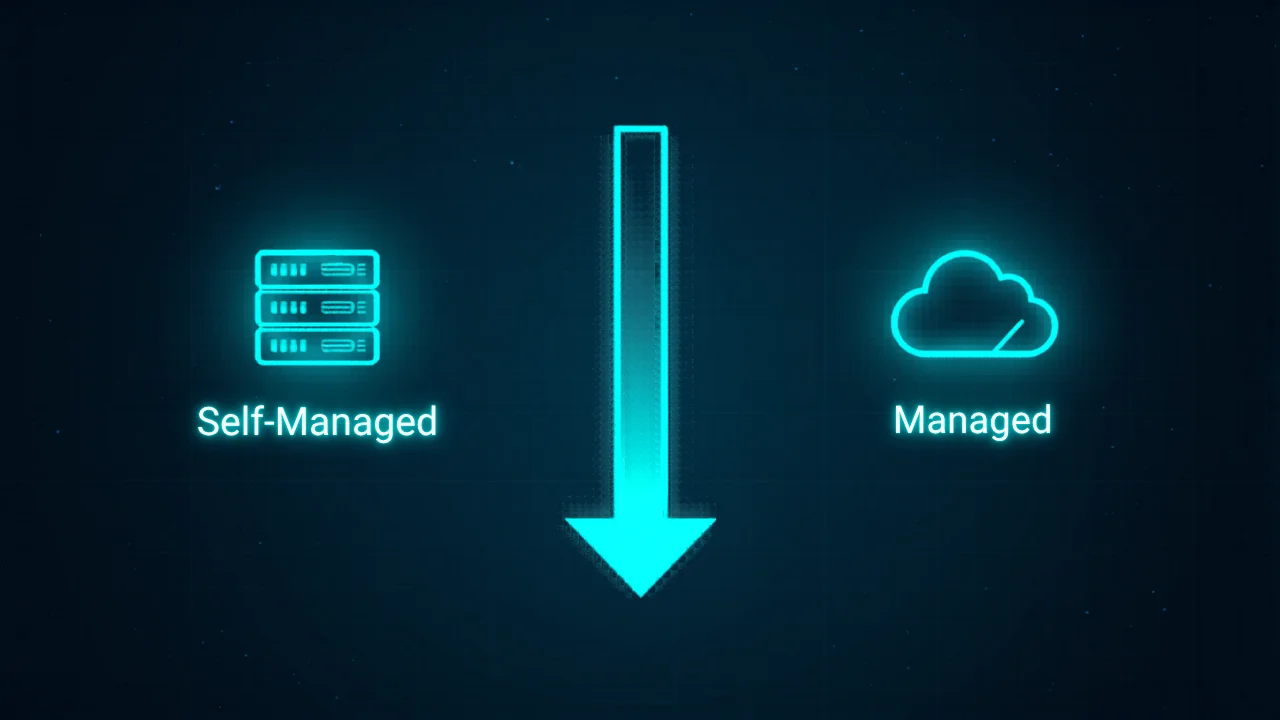
The question A6 addresses is not whether that model is useful — it clearly is. The question is whether you should be running it yourself or using Abacus AI’s managed Claw path instead.
This comparison is not about which option is universally better. It is about which fits your current operating model, team capacity, and tolerance for infrastructure.
Quick Answer: Self-managed OpenClaw gives you maximum control, lower long-term cost at scale, and full ownership of your agent environment. Abacus Claw gives you a hosted version of the same model with faster onboarding, no infrastructure overhead, and a bundled workspace that includes model access, Deep Agent, and other tools. The right answer depends almost entirely on how much you value control versus convenience at your current stage.
What the Comparison Actually Is
Before going further, it is worth being precise about what is being compared.
Self-managed OpenClaw refers to running your own OpenClaw environment — handling your own deployment, API connections, storage, scheduling, and ongoing maintenance. The OpenClaw daily publishing workflow is a concrete example of what this looks like in practice: a persistent agent running on a defined schedule, producing real content output without manual intervention.
Abacus Claw is Abacus AI’s hosted version of OpenClaw. According to Abacus AI’s public documentation, Abacus Claw is designed to replicate the core OpenClaw capabilities — persistent memory, cloud computer access, multi-channel presence, background cron automation, and tool integrations — but within Abacus AI’s managed infrastructure rather than your own.
The broader Abacus AI platform guide covers the full product stack. This article focuses specifically on the Claw comparison.
Where Self-Managed OpenClaw Has the Advantage
Running OpenClaw yourself is the right choice in a specific set of conditions.
Full Environment Control
When you manage the environment, you decide every detail:
- which models run which tasks
- where data is stored and how long it persists
- which tools and integrations are connected
- how workflows are structured and sequenced
- what triggers tasks and when
That level of control is operationally valuable for teams that have workflows complex enough to require it. If your agent needs to interact with internal systems, proprietary data sources, or non-standard integrations, self-hosting gives you the flexibility to build exactly what you need.
Lower Cost at Scale
Self-hosting has a meaningful cost advantage once your operation reaches sufficient scale.
A managed platform charges for the service layer on top of the underlying model costs. At low volume, that overhead is worth paying for the convenience. At high volume — many agent runs, large persistent workflows, extensive tool usage — the self-hosted model can become significantly cheaper because you are only paying for the underlying compute and model API costs.
No Vendor Dependency
A self-managed environment does not disappear if a vendor changes pricing, modifies their product, or shuts down a specific feature.
For operators who have built significant workflows on top of their agent environment, that independence has real value. Product decisions made by Abacus AI will not affect your own deployment.
Maximum Stack Modularity
When you self-host, you can swap individual components — models, tools, storage layers — without being constrained by what a managed platform has decided to bundle.
That modularity matters for operators who have specific preferences about which model handles which task type, or who need to integrate with systems that a managed platform does not natively support.
Where Abacus Claw Has the Advantage
The managed path is the better choice in a different and equally common set of conditions.
No Infrastructure to Manage
This is the most direct advantage and the most commonly underestimated.
Running OpenClaw yourself requires:
- initial provisioning and setup
- API key management across multiple providers
- storage and memory configuration
- ongoing maintenance as models and dependencies change
- debugging when something breaks
That overhead is non-trivial. For a solo operator or a small team where infrastructure maintenance is not a core competency, it is a meaningful cost even when it is not a dollar cost. It is a time cost, a context-switching cost, and an operational risk.
Abacus Claw removes that layer. The infrastructure is managed. The environment is maintained. Updates are handled without you needing to touch anything.
Faster Time to Running Agents
The practical implication of removing infrastructure is speed.
A team that wants to evaluate whether persistent agents are actually useful for their operation does not need to build the entire self-hosted environment first. With Abacus Claw, you can get to working agents faster and validate the model before investing in a more custom setup.
This matters most at the evaluation and early production stage. If you are not yet sure whether persistent agents fit your workflow, starting with a managed path is the lower-risk entry point.
Bundled Model Access
Abacus AI wraps the Claw environment inside a broader platform that also includes ChatLLM Teams, Deep Agent, and access to many leading models.
For operators whose workflow is not only agent-execution but also research, writing, reasoning, and cross-model tasks, the bundled environment reduces the number of separate subscriptions and tools they need to manage.
That consolidation has real operational value even if no individual component is the absolute best in its category.
Multi-Channel and Memory Without Custom Build
Abacus Claw is designed to support persistent memory, multi-channel communication, and background scheduling natively.
Building that same capability from scratch in a self-managed OpenClaw environment is possible but requires meaningful upfront work. For operators who want those capabilities without building them themselves, the managed path delivers functional persistent agents sooner.
The Key Decision Dimensions
Use these four dimensions to determine which path fits your current stage.
1. Infrastructure tolerance
Self-managed: You are comfortable with setup, maintenance, and occasional debugging of a cloud environment.
Managed (Abacus Claw): You want to use the agent capability, not build and maintain the platform.
If you have a technically capable person on your team and that infrastructure investment fits your roadmap, self-managed is viable. If infrastructure is a distraction from your core operation, managed is the right call.
2. Stage of evaluation
Self-managed: You have already validated that persistent agents work for your use case and are ready to invest in a custom, scalable environment.
Managed (Abacus Claw): You are still evaluating whether persistent agents are worth the investment for your operation.
Running a managed path during the evaluation stage protects you from over-investing in infrastructure before the value is confirmed.
3. Scale and cost sensitivity
Self-managed: Your operation runs enough agent volume that the margin on a managed service layer becomes meaningful.
Managed (Abacus Claw): Your operation is in early or mid growth where the convenience premium is worth paying relative to the operational overhead of self-hosting.
The crossover point depends heavily on how intensively you run agents and how much development time self-hosting actually requires.
4. Workflow complexity and custom integration needs
Self-managed: Your workflows require integrations, data sources, or configurations that a managed platform cannot support.
Managed (Abacus Claw): Your workflows fit within what the managed platform supports, and that coverage is sufficient.
Abacus Claw covers the common use cases well. If your needs extend beyond the standard integration set, you will likely hit limits that make self-hosting the more practical path.
A Practical Routing Framework
Run through these questions in order.
Do you already have a working self-managed OpenClaw environment?
If yes, evaluate whether switching to a managed path actually saves you time or just adds a cost layer. If your environment is stable and the workflows are proven, there may be no reason to move.
Are you starting fresh and trying to evaluate whether persistent agents fit your operation?
If yes, start with Abacus Claw. Get to working agents faster, validate the model, then decide whether to invest in a self-managed environment based on real evidence.
Does your workflow require integrations or configurations that Abacus Claw does not support?
If yes, self-managed is likely the path regardless of other factors.
Is infrastructure management a meaningful burden for your current team?
If yes, the time cost of self-hosting is probably underestimated. The managed path may have better economics once you account for operational overhead rather than just subscription cost.
What Neither Option Solves
This comparison is about the operating layer, not the underlying strategy.
Neither self-managed OpenClaw nor Abacus Claw solves a weak workflow design. If the agent tasks are not clearly defined, the triggers are not logical, and the outputs are not actually useful, the hosting decision does not matter.
The AI tools for affiliate content workflows guide covers how the agent layer fits inside a broader content operation — which is the more useful frame if you are still mapping out what the workflow should look like before deciding how to host it.
Frequently Asked Questions
Is Abacus Claw the same as OpenClaw?
Abacus Claw is Abacus AI’s managed, hosted version of OpenClaw. The underlying capability model is the same — persistent memory, background automation, multi-channel presence — but Abacus Claw runs in Abacus AI’s infrastructure rather than your own environment.
Do I need technical skills to run self-managed OpenClaw?
More than you need to run Abacus Claw. Self-hosting requires environment setup, API key configuration, storage management, and periodic maintenance. None of it is extraordinarily complex, but it requires consistent technical attention. Abacus Claw removes that layer entirely.
Is Abacus Claw more expensive than self-managed OpenClaw?
At low to mid volume, the managed path may cost more in subscription terms but cost less when you factor in the development and maintenance time saved. At high volume, self-hosting often becomes cheaper because you are not paying for a managed service layer on top of compute. The break-even point depends on your specific usage pattern.
Can I migrate from Abacus Claw to self-managed OpenClaw later?
In principle, yes — the underlying model is the same. In practice, migrating workflows built on top of a managed platform requires rebuilding the infrastructure and re-configuring integrations. It is easier to start with the managed path and move to self-hosted than to do it the other way.
Which should a solo operator start with?
Almost always the managed path. Infrastructure overhead is proportionally larger for solo operators than for teams, and the faster validation cycle is more valuable when you are the only person making the call.
Evaluate the Abacus AI Managed Path
If the managed Claw path is worth testing for your operation, the Abacus AI tool page covers the current product, pricing context, and what to check before committing.
It helps you:
- Understand what Abacus Claw actually includes versus self-managed OpenClaw
- Evaluate whether the bundled workspace justifies the subscription
- Get to a clear next step without reading the full documentation first